

OEM Parts
GE Washer Repair Near You — Full Brand List
Local GE technicians ready to fix your Washer near you. Same-day appointments available.
Mon–Fri 7am–7pm · Sat 8am–5pm
Manufacturers We Are Trained On












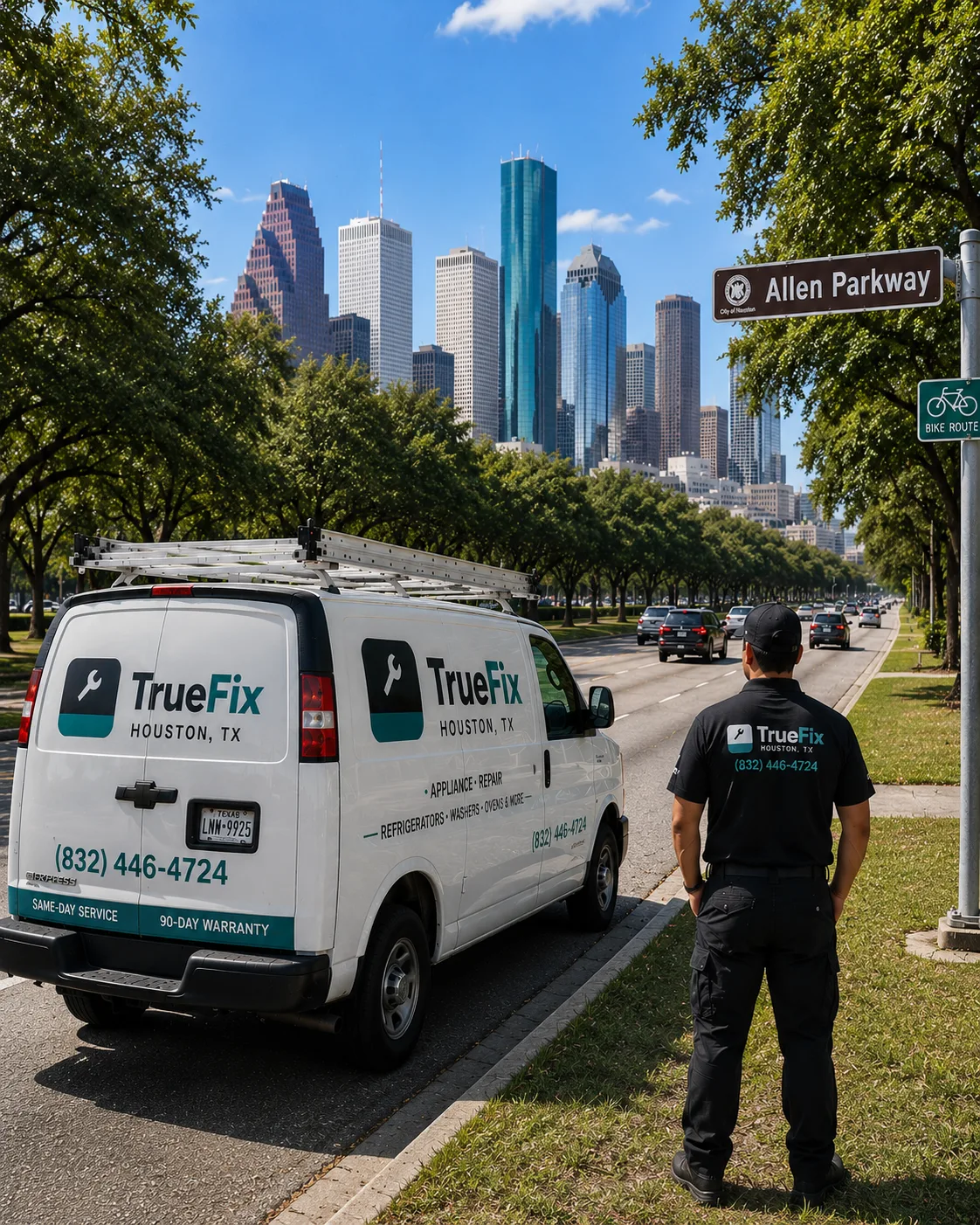
Built for Houston — Homes, Condos & More
True Fix Houston is your local provider for GE Washer repair. Our neighborhood technicians work on GE equipment and access to genuine OEM parts. We repair all GE Washer models, handle all common problems, and back our work with a 90-day parts and 30-day labor warranty. Book online or call for same-day service near you.
How a Call Actually Goes
Related Services
Houston technicians across every appliance and brand we cover.
GE washer repair: what to know
Under both the GE and GE Profile badges you will find top-loaders and front-loaders, and the two designs behave quite differently when something goes wrong. Traditional GE top-loaders use a gentle dual-action agitator and a lid lock that must confirm closure before spin. Many GE front-loaders add the UltraFresh Vent System with OdorBlock, which pulls in and circulates fresh air to dry the door, gasket and basket after a cycle. On a top-loader, the usual trouble spots are the lid lock assembly, the drain pump, suspension rods and the drive. On a front-loader they are the door lock, the drain pump and its debris filter, the door boot and the bearings behind the drum. Houston's damp air works against front-loaders, so musty smells and mildew in the boot fold are the complaint we hear most, followed by top-loaders that fill and wash but stop before spinning.
Faults we see on GE washers
Top-loader washes but will not spin
GE top-loaders lock the lid before spinning. If the lock cannot confirm it latched, because of a broken strike on the lid, a worn lock motor or a damaged wire through the hinge area, the control stops the cycle. The technician checks the strike, tests the lock assembly and inspects the harness before considering the drive or board.
Musty smell from a front-loader
Moisture sitting in the boot's folds, behind the detergent drawer and around the pump's debris trap is what produces the smell. The UltraFresh vent, which starts on its own after a cycle on some models, helps only if the vent path is clear. A tech cleans the boot, removes the pump filter, checks the vent fan and looks for a slow drain that leaves water behind.
Water left in the drum
Socks, coins and hair pins collect in the drain pump filter or the pump inlet. A pump that hums without pushing water, or a hose jammed deep into the standpipe so it siphons, can also leave the drum wet. The drain path from tub to standpipe is traced and the pump tested under load.
Loud banging during spin
Top-loaders rely on suspension rods with damping cups, and as they wear, an off-balance load slams the tub against the cabinet. On front-loaders similar knocking points to tired dampers, while a bad drum bearing gives a roar instead. The technician tells the two apart by spinning the drum by hand and checking the dampers.
Front-load door will not lock
The door lock on a front-loader includes a latch, a switch and a small actuator. A cracked door hook, a lock jammed with detergent or a failed actuator keeps the cycle from starting. The tech inspects the hook and strike, meters the lock, and follows its harness back toward the control.
Check these before you call
- Close the lid or door firmly and look for a cracked plastic strike or hook on the lid edge or door.
- Make sure the drain hose goes into the standpipe only a few inches and is not kinked behind the washer.
- On a front-loader, wipe the rubber fold at the door and prop the door open after the last load unless UltraFresh venting is running.
- Use HE detergent in the measured dose; too much leaves suds that slow the drain and cause odors.
- Pause a noisy spin and spread the load evenly, especially single heavy items like blankets.
Finding the model number
GE says top-load washer tags may be under the lid near the right hinge, on the back of the control panel, at the bottom left exterior corner, or on the back near the water inlets; front-load washer tags may be inside the door on the wash compartment face or on the exterior right side near the lower front corner. Having it ready lets the technician bring the right part on the first visit.
Repair it or replace it?
On GE washers, lid locks, door locks, drain pumps, inlet valves, suspension rods and boots are routine repairs that make sense at most ages. The expensive failures are a front-loader drum bearing, which often means replacing the outer tub, and a failed main control board or drive motor on an older unit. If a washer past its tenth year needs one of those, or the tub is cracked, replacing it is usually the better value.
GE washer questions
Why does my GE front-load washer smell musty?
Moisture stays in the gasket fold, the dispenser housing and the drain pump filter, and warm, humid weather speeds up mildew growth. Clean all three, run the washer's clean cycle, and leave the door open or use the UltraFresh vent if your model has it. Too much detergent makes the problem worse.
Why won't my GE top-load washer spin?
The most common cause is the lid lock: no confirmed lock, no spin. An off-balance load, a slow drain that leaves water in the tub, or drive components can also stop spin. Check the lid strike, rearrange the load, and confirm the washer drains.
Where do I find my GE washer model number?
GE lists several places. On top-loaders, look under the lid near the right hinge, on the back of the control panel, at the bottom left corner of the cabinet, or on the back near the water inlets. On front-loaders, check inside the door on the wash compartment face or on the lower front corner of the right side.